




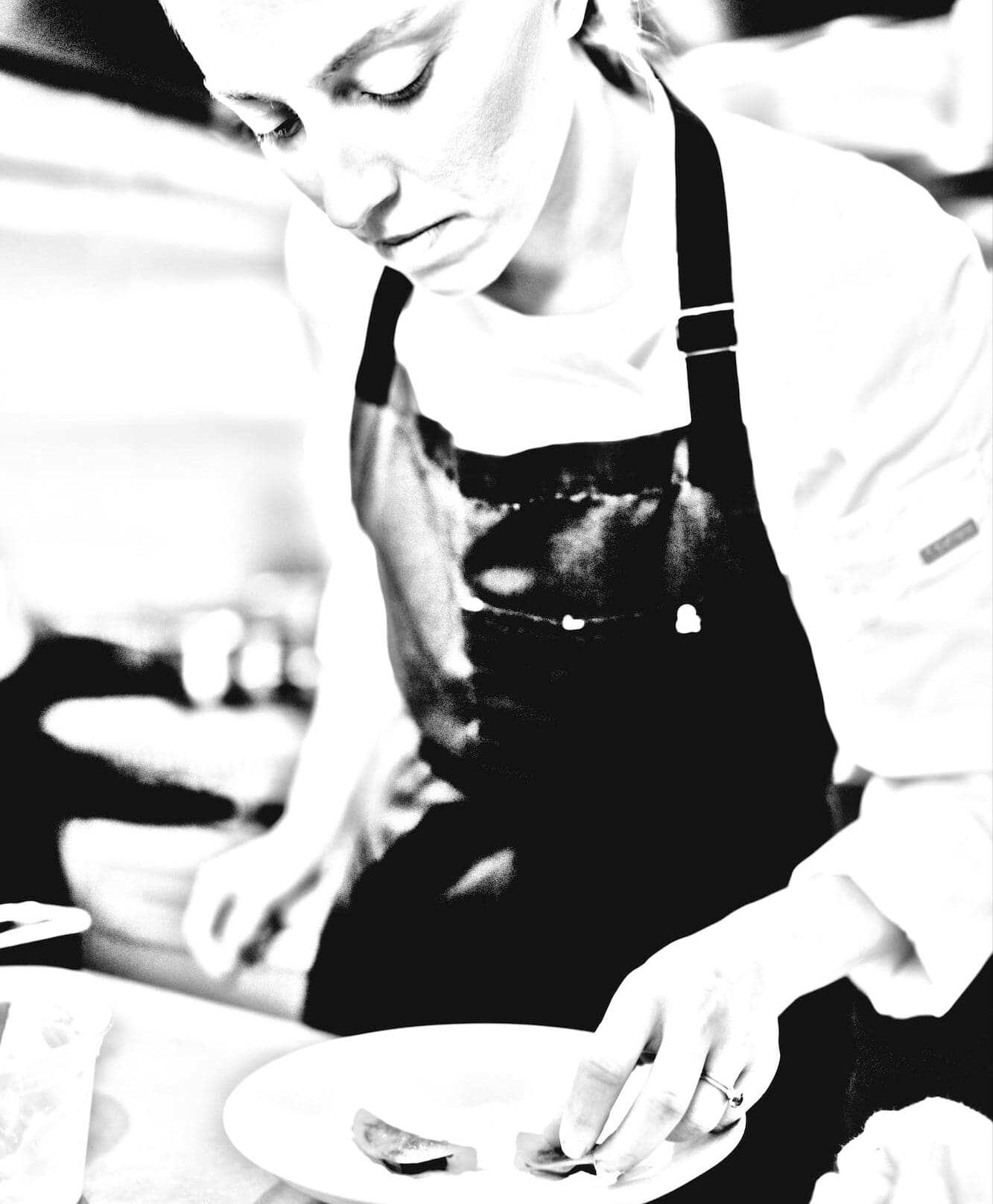
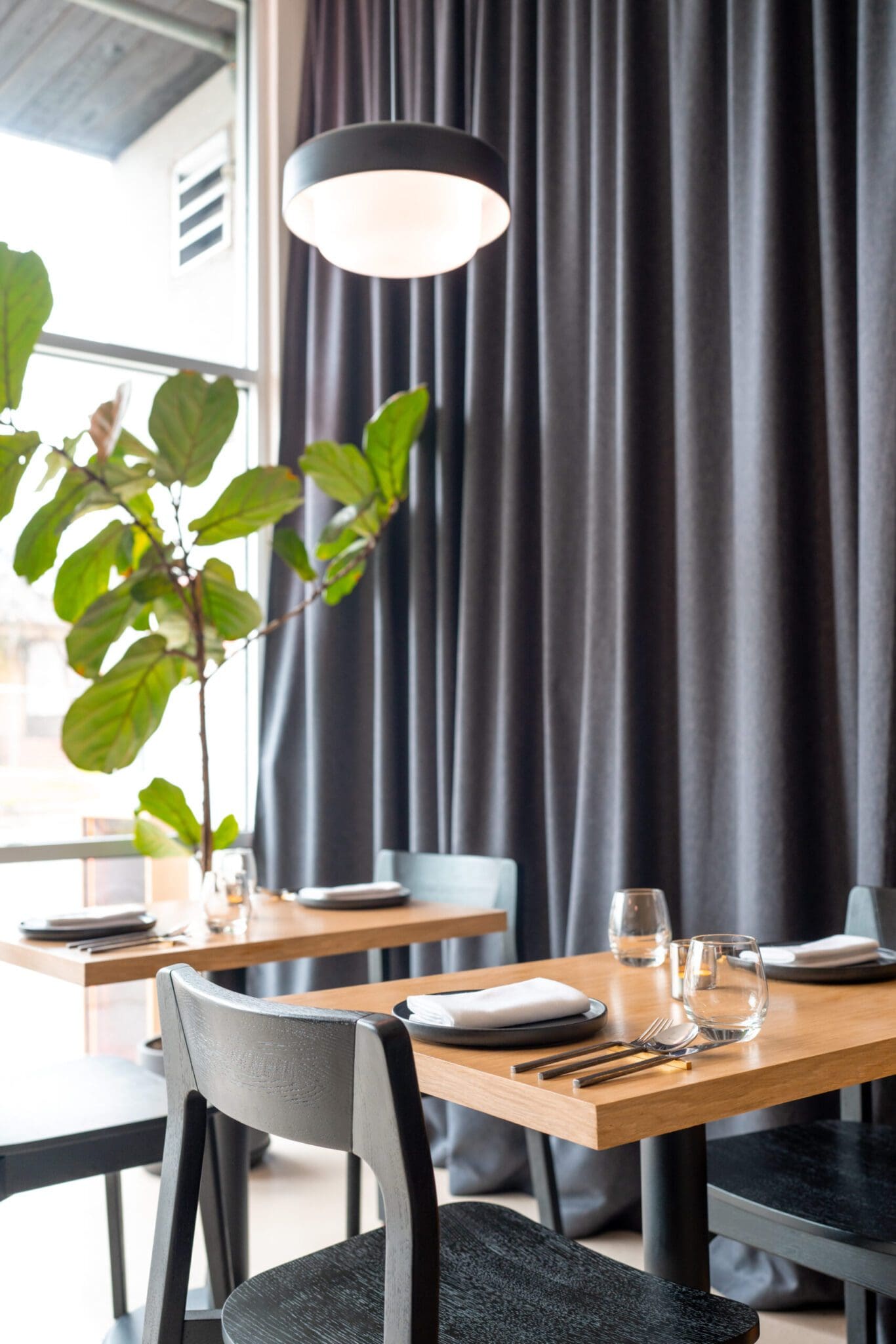
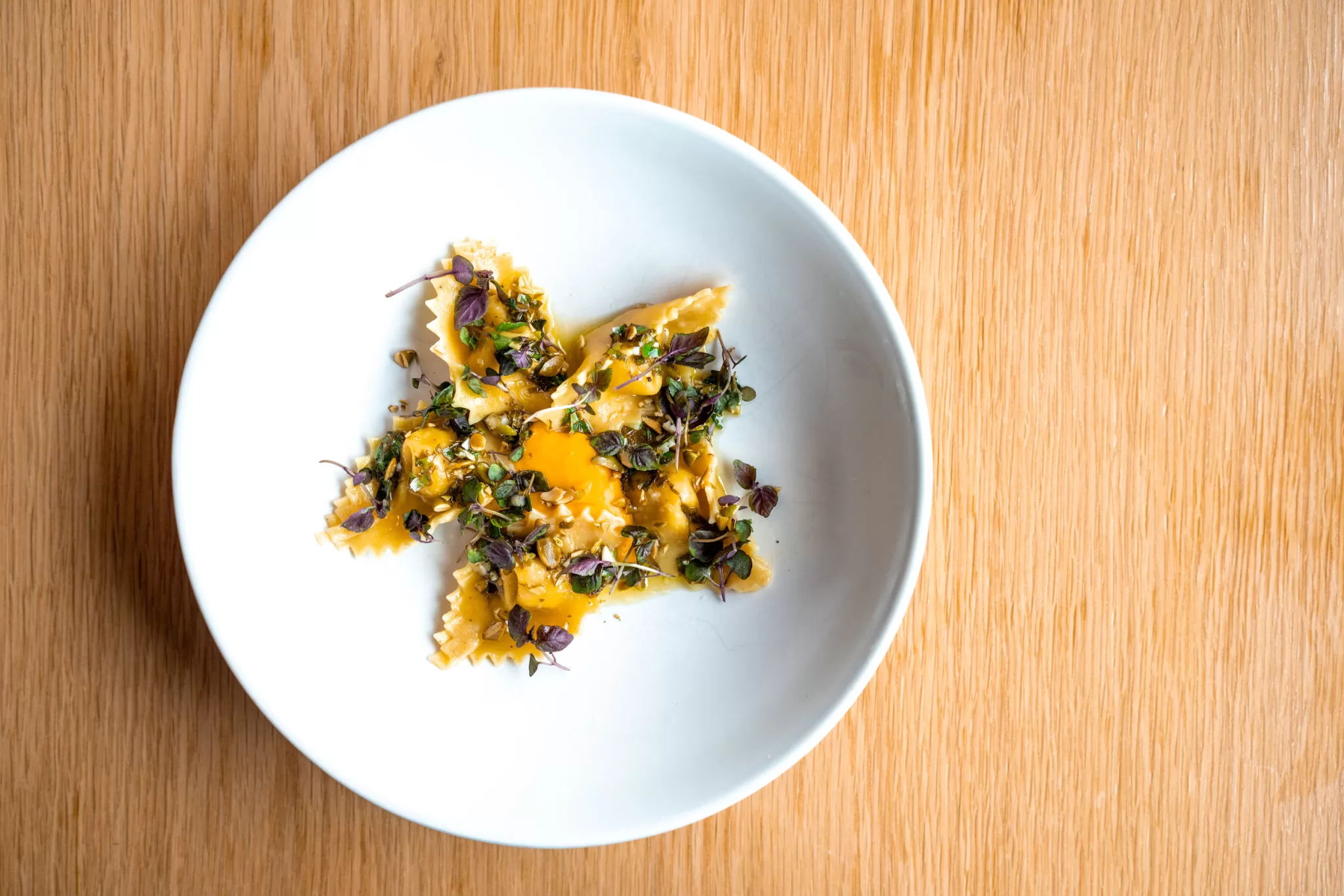
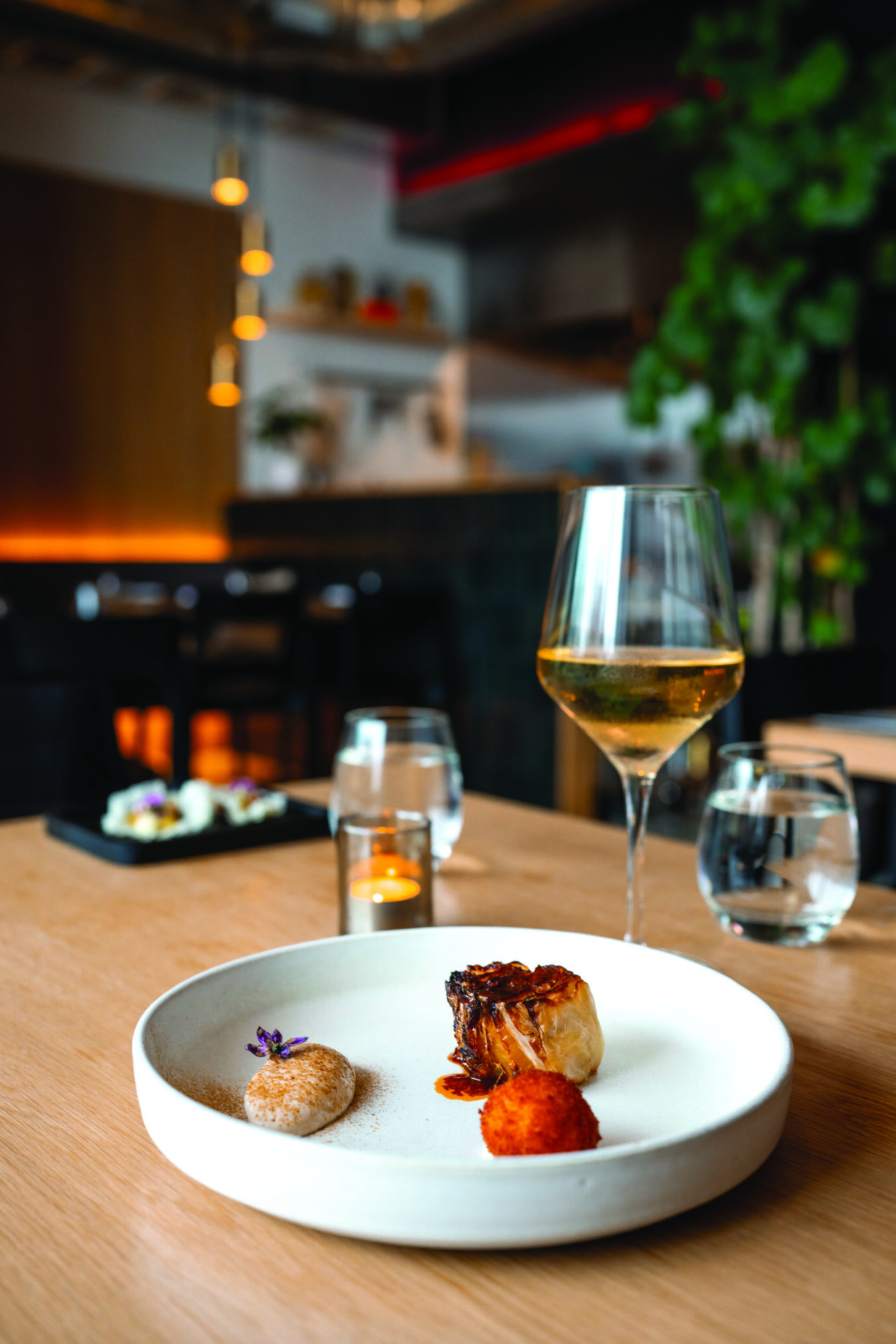
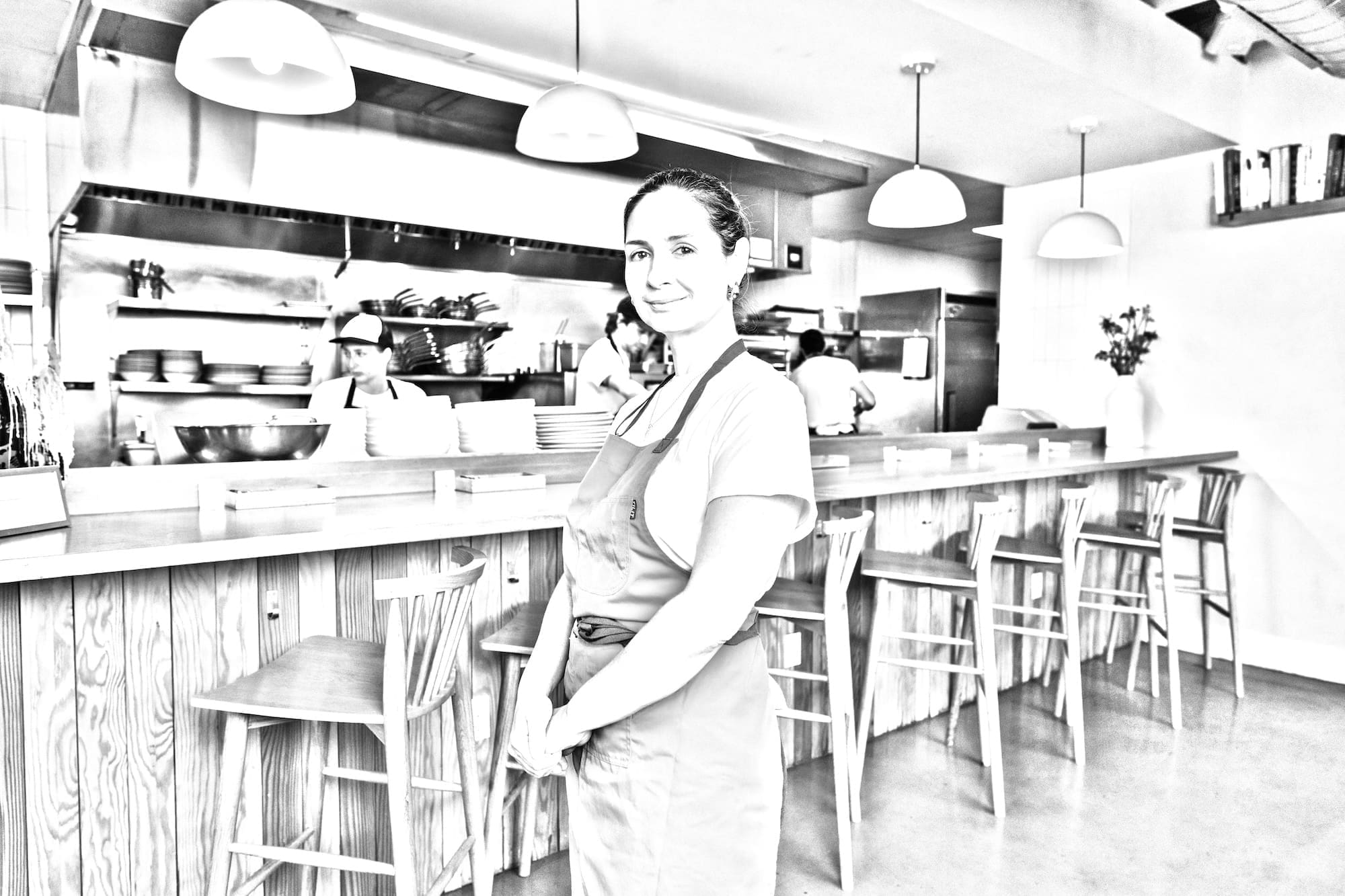
Global influences and attention to sustainable practices mark the menu at Fabrik, the white-tablecloth marvel of Austin’s ever-expanding plant-based scene. Bostonian chef Je Wallerstein pulls from Nordic, Japanese, and Italian traditions that together culminate in kaleidoscopic seasonal prix-fixe menus. The Northeasterner traded her snow boots for cowboy boots in 2020 when she relocated to Austin to open the vegan micro-restaurant where she strives never to imitate dairy- and meat-centric dishes but rather plays with produce in a way that challenges patrons to rethink their preconceptions about botanical cuisine.
Q: What’s a hidden gem in East Austin that more people should know about?
JW: At the end of a long prep day, I love to pop into the Community Garden for a cheeky glass of wine, great music, and a chilled atmosphere.
Q: Is there a dish from a certain restaurant that evokes strong emotions of nostalgia for you?
JW: The falafel wrap at Kebabalicious makes me feel like I’m back in Berlin.
Q: What’s an underrated restaurant in East Austin that deserves more attention?
JW: I don’t know if I’d quite class it as ‘underrated,’ but more that it’s understated and maybe overlooked because it’s been here for so long: Mr. Natural which will always have a place in my heart. The first time I visited Austin, it was the first restaurant I went to directly from the airport. I had the Chile Relleno plate and fell in love. Their little vegan chocolate donuts are addictive.
Q: What’s the one dish in East Austin everyone should try at least once?
JW: The Vegan Nom’s Korean BBQ Taco
Q: What’s a local restaurant that’s doing something truly unique?
JW: As an Austin staple for decades, when I saw that Casa de Luz was opening a new location just a block up the road from Fabrik, I was so excited. Their ever-changing menu that utilizes super fresh and seasonal produce is excellent value and always leaves me feeling nourished. The ambiance is very spa-like and peaceful, just good vibes all round.
Q: What is the thing you eat most at your own restaurant?
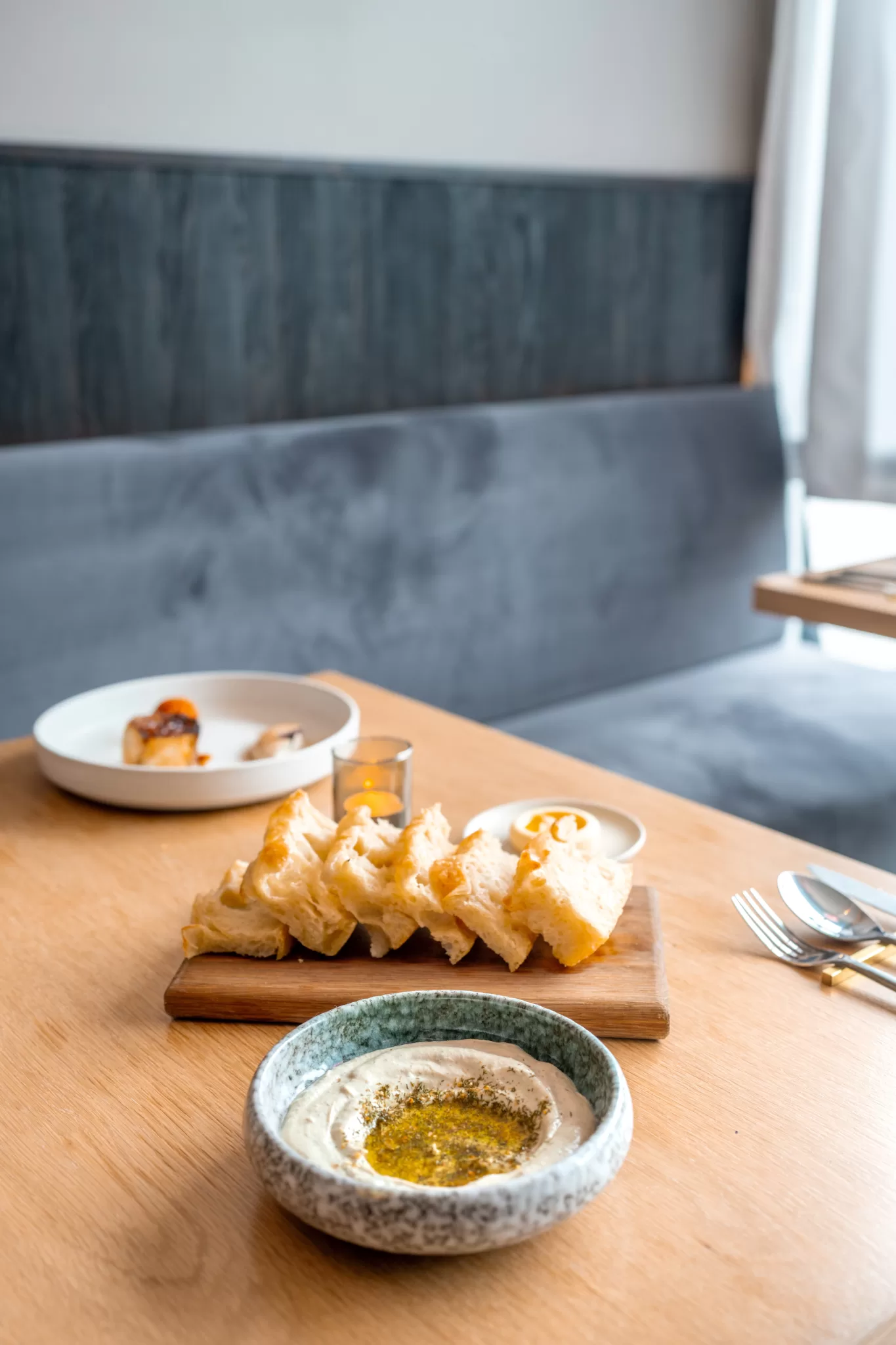
JW: So much bread. With a fixed amount of covers each night, we are really able to control our production to reduce excess and waste, but there’s always extra bread scraps and off-cuts that we all eat or take home at the end of the night.
Q: What is the thing you cook most at home?
JW: After prepping and plating composed, coursed menus all day and night, I’m usually eating a really sad salad with whatever is in the fridge. One of my go-to’s is canned chickpeas with cholula. Don’t knock it until you’ve tried it.
Q: Where do you find inspiration? What keeps you motivated to continue creating?
JW: Like most chefs, I think being creative is an impulse. It just takes one ingredient or one flavor to inspire dozens of ideas that can be workshopped to turn a jumping-off point into a composed dish. The seasons and what’s available locally are always my starting point when planning a new seasonal menu.
Q: What’s one thing about Austin’s food scene that people don’t talk about enough? Or that you wished more people knew?
JW: I think Austin’s food scene is really diverse. The range of experiences here and the environments are ever-evolving. It’s an exciting time to be a part of the culinary landscape. It feels like there’s room for everyone, and the chef community is really supportive. We all know what a tough job and industry this is. There is an innate mutual respect for each other, and we really all want to see everyone around us succeed. I have had the pleasure of connecting and aligning with many industry locals. I am excited to participate in the Field Guide Festival this year to connect with more culinary icons whom I admire.
Q: Do you make your own items from scratch?
JW: We produce all our own ferments in-house, our own cheeses and nut milk, all our own bread, pasta – just about everything! Some of those processes are necessary for flavor and controlling the exact output I want for a specific dish, and some processes are necessary for a more technical reason. For example, in order to effectively create an almond milk ricotta, we need to make our own almond milk without the additives you’d get from a store-bought version to ensure it coagulates effectively. We love using fermentation, preservation, dehydration, or even flash freezing as methods to continually utilize out-of-season ingredients or prevent excess products from going to waste.




[…] Read More […]