






Tarmacs and Town Homes
Words by Chris Ferguson & Janine Stankus
Decades after going all-in on new urbanism, East Austin’s largest planned neighborhood has finally landed.
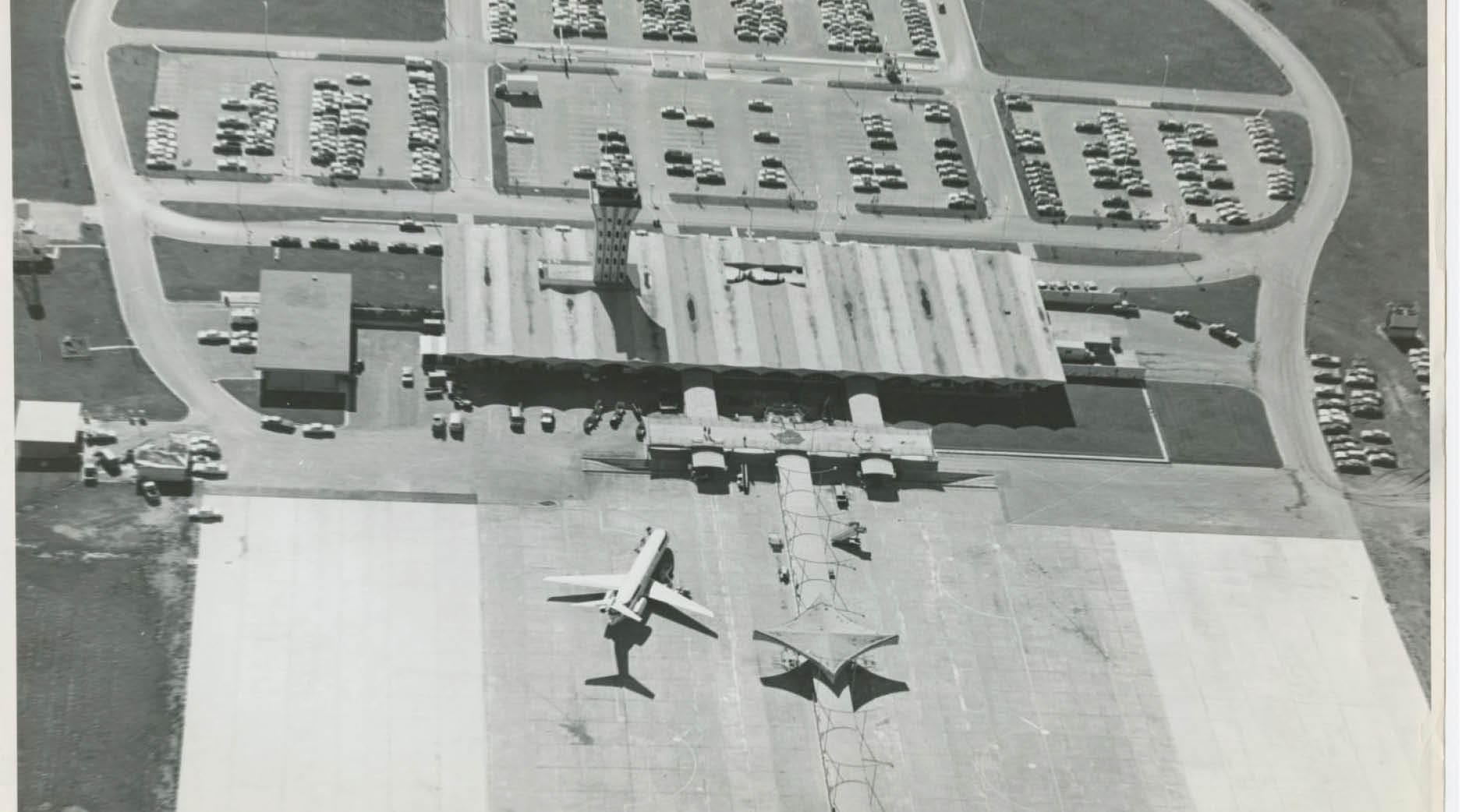
In May 1961, Vice President Lyndon B. Johnson was in town to visit Austin Mayor Lester Palmer to officially unveil a soaring new terminal and control tower at Robert Mueller Municipal Airport, which had originally opened in 1930 and provided the town’s first commercial runways.
The city enlisted renowned architects Fehr & Granger, who delivered a sleek, streamlined modernist aesthetic that welcomed travelers with open, airy spaces. The spacious and elegant structures were not just much-needed upgrades for a booming population, but they were also a visual representation of Austin’s determination to stay on the cutting edge of air travel.
It remained Austin’s primary commercial hub only until 1999, when advancements in aviation and a buzzing economy would render it obsolete. As Austin-Bergstrom International Airport came online, Mueller’s 700 acres of centrally located dirt afforded the city a generational opportunity.
Today, nearly 70 years since its ambitious expansion, Mueller is still a potent symbol of a city signaling its growth-minded priorities. This time though, it’s a national case study for new urbanist principles.
Arranged neatly along tree-lined streets stand about 7,000 residences: a diverse array of single-family homes, apartments, condos, and affordable housing peppered with pocket parks, ponds, and trails. It’s decidedly walkable, with zoned, mixed-use retail and dining options supported by critical community anchors like H-E-B, Texas Farmers’ Market, Dell Children’s Medical Center, and a children’s museum: Thinkery.
Notably, Mueller is very dense. Designed to inject affordable, central housing stock into a starving market, the masterplan’s goal of filling land with desirable places to live has been an unequivocal success. It’s also entirely self-contained. Its infrastructure promotes walkability, and since the neighborhood integrates hospitals, parks, schools, offices, and entertainment venues, a major draw of living in Mueller is rarely having to leave. It’s an interesting juxtaposition, considering the site’s symbolism as a portal to move through Austin for six million annual travelers just 25 years ago.
While Mueller’s success as an urban development is undeniable, its new status as a bustling micro community has had uneven effects on East Austin’s own sense of identity. Its rapid, large-scale emergence was a bold gesture, one that displaced few and empowered many. And yet its sudden, orchestrated arrival makes it feel like a bubble when passing through from anywhere else in town, a reminder that places are built, but identity is accrued.
Mueller’s next chapters will no longer be written by planners and architects but by those who live and work there. Issues of long-term affordability, equitability, and socioeconomic diversity will hopefully continue to be forces that mold the neighborhood, as it shapes the city as a whole.
Mueller’s aspirational legacy endures in its current gleaming, forward-thinking configuration. The story that comes next will shape Austin for generations to come.





[…] Click Here to Read More […]